Commander Synergies
Discover cards that synergize perfectly with your Commander.
Synergy
Card Details
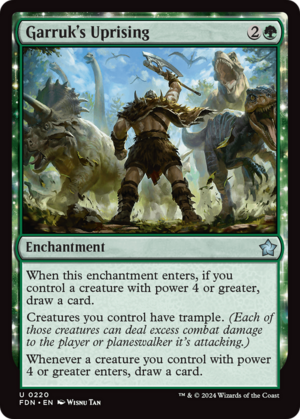
Garruk's Uprising #220 Enchantment
Info
| Color: |  |
| Identifies: | |
| Cost: |
  |
| Rarity: | Uncommon |
| Converted Cost: | 3 |
| Power/Toughness: | / |
| Types: | |
| SubTypes: | |
| Languages: | 
         |
| Layout: | Normal |
| Rank: | |
| Saltiness: |
Rules
Prices
Legalities
Brawl
Paupercommander
Predh
Standardbrawl
Vintage
Gladiator
Premodern
Oathbreaker
Duel
Pauper
Modern
Alchemy
Future
Timeless
Historic
Oldschool
Penny
Commander
Legacy
Standard
Pioneer
Text
When this enchantment enters, if you control a creature with power 4 or greater, draw a card. Creatures you control have trample. (Each of those creatures can deal excess combat damage to the player or planeswalker it's attacking.) Whenever a creature you control with power 4 or greater enters, draw a card.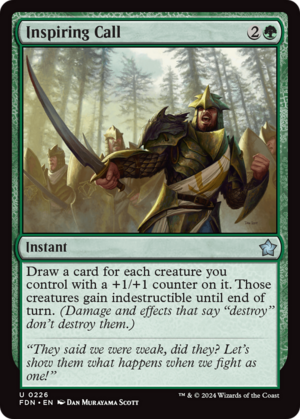
Card Details
Inspiring Call #226 Instant
Info
| Color: | |
| Identifies: | |
| Cost: |
|
| Rarity: | Uncommon |
| Converted Cost: | 3 |
| Power/Toughness: | / |
| Types: | |
| SubTypes: | |
| Languages: |
|
| Layout: | Normal |
| Rank: | |
| Saltiness: |
Rules
Prices
Legalities
Brawl
Paupercommander
Predh
Standardbrawl
Vintage
Gladiator
Premodern
Oathbreaker
Duel
Pauper
Modern
Alchemy
Future
Timeless
Historic
Oldschool
Penny
Commander
Legacy
Standard
Pioneer
Text
Draw a card for each creature you control with a +1/+1counteron it. Those creatures gain indestructible until end of turn. (Damage and effects that say "destroy" don'tdestroythem.)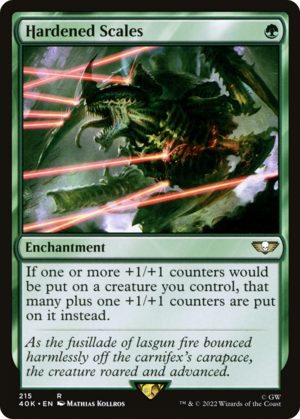
Card Details
Hardened Scales #215 Enchantment
Info
| Color: | |
| Identifies: | |
| Cost: |
|
| Rarity: | Rare |
| Converted Cost: | 1 |
| Power/Toughness: | / |
| Types: | |
| SubTypes: | |
| Languages: |
|
| Layout: | Normal |
| Rank: | |
| Saltiness: |
Rules
Prices
Legalities
Brawl
Paupercommander
Predh
Standardbrawl
Vintage
Gladiator
Premodern
Oathbreaker
Duel
Pauper
Modern
Alchemy
Future
Timeless
Historic
Oldschool
Penny
Commander
Legacy
Standard
Pioneer
Text
If one or more +1/+1 counters would be put on a creature you control, that many plus one +1/+1 counters are put on it instead.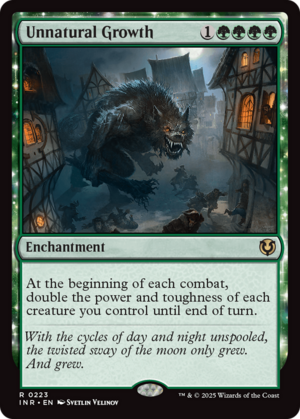
Card Details
Unnatural Growth #223 Enchantment
Info
| Color: | |
| Identifies: | |
| Cost: |
 |
| Rarity: | Rare |
| Converted Cost: | 5 |
| Power/Toughness: | / |
| Types: | |
| SubTypes: | |
| Languages: |
|
| Layout: | Normal |
| Rank: | |
| Saltiness: |
Abilities/Keywords
Rules
Prices
Legalities
Brawl
Paupercommander
Predh
Standardbrawl
Vintage
Gladiator
Premodern
Oathbreaker
Duel
Pauper
Modern
Alchemy
Future
Timeless
Historic
Oldschool
Penny
Commander
Legacy
Standard
Pioneer
Text
At the beginning of each combat, double the power and toughness of each creature you control until end of turn.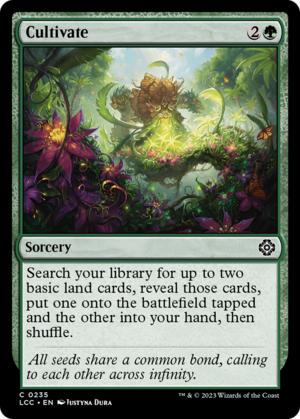
Card Details
Cultivate #235 Sorcery
Info
| Color: | |
| Identifies: | |
| Cost: |
|
| Rarity: | Common |
| Converted Cost: | 3 |
| Power/Toughness: | / |
| Types: | |
| SubTypes: | |
| Languages: |
|
| Layout: | Normal |
| Rank: | |
| Saltiness: |
Rules
Text
Search your library for up to two basic land cards, reveal those cards, put one onto the battlefield tapped and the other into your hand, thenshuffleLess Synergy
Card Details
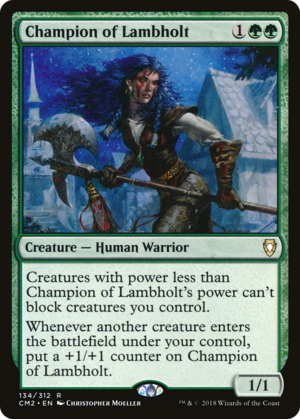
Champion of Lambholt #134 Creature — Human Warrior
Info
| Color: | |
| Identifies: | |
| Cost: |
|
| Rarity: | Rare |
| Converted Cost: | 3 |
| Power/Toughness: | 1/1 |
| Types: | |
| SubTypes: | |
| Languages: |
|
| Layout: | Normal |
| Rank: | |
| Saltiness: |
Rules
Text
Creatures with power less than this creature's power can't block creatures you control. Whenever another creature you control enters, put a +1/+1counteron this creature.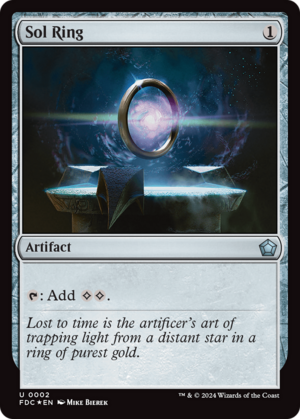
Card Details
Sol Ring #2 Artifact
Info
| Color: |  |
| Identifies: | |
| Cost: |
|
| Rarity: | Uncommon |
| Converted Cost: | 1 |
| Power/Toughness: | / |
| Types: | |
| SubTypes: | |
| Languages: |
|
| Layout: | Normal |
| Rank: | |
| Saltiness: |
Rules
Text
 : Add .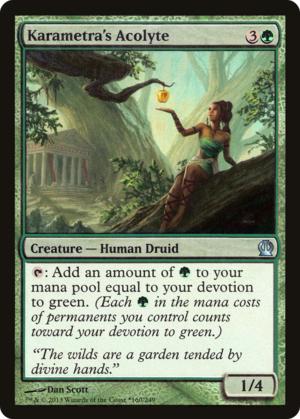
Card Details
Karametra's Acolyte #160 Creature — Human Druid
Info
| Color: | |
| Identifies: | |
| Cost: |
 |
| Rarity: | Uncommon |
| Converted Cost: | 4 |
| Power/Toughness: | 1/4 |
| Types: | |
| SubTypes: | |
| Languages: |
|
| Layout: | Normal |
| Rank: | |
| Saltiness: |
Rules
Text
: Add an amount of equal to your devotion to green. (Each in the mana costs of permanents you control counts toward your devotion to green.) 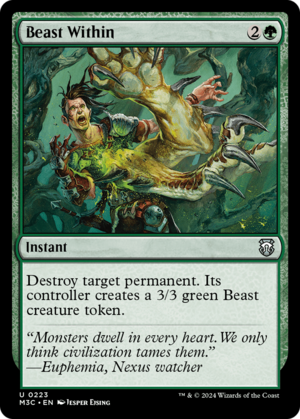
Card Details
Beast Within #223 Instant
Info
| Color: | |
| Identifies: | |
| Cost: |
|
| Rarity: | Uncommon |
| Converted Cost: | 3 |
| Power/Toughness: | / |
| Types: | |
| SubTypes: | |
| Languages: |
|
| Layout: | Normal |
| Rank: | |
| Saltiness: | |
| Tokens: |
Rules
Prices
Legalities
Brawl
Paupercommander
Predh
Standardbrawl
Vintage
Gladiator
Premodern
Oathbreaker
Duel
Pauper
Modern
Alchemy
Future
Timeless
Historic
Oldschool
Penny
Commander
Legacy
Standard
Pioneer
Text
Destroy target permanent. Its controller creates a 3/3 green Beast creature token.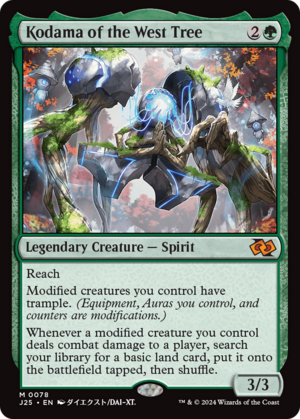
Card Details
Kodama of the West Tree #78 Legendary Creature — Spirit
Info
| Color: | |
| Identifies: | |
| Cost: |
|
| Rarity: | Mythic |
| Converted Cost: | 3 |
| Power/Toughness: | 3/3 |
| Types: | |
| SubTypes: | |
| Languages: |
|
| Layout: | Normal |
| Rank: | |
| Saltiness: |
Abilities/Keywords
Rules
Text
Reach Modified creatures you control have trample. (Equipment, Auras you control, and counters are modifications.) Whenever a modified creature you control deals combat damage to a player, search your library for a basic land card, put it onto the battlefield tapped, thenshuffle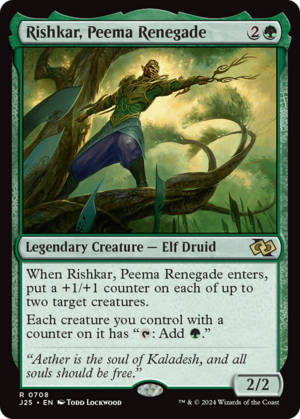
Card Details
Rishkar, Peema Renegade #708 Legendary Creature — Elf Druid
Info
| Color: | |
| Identifies: | |
| Cost: |
|
| Rarity: | Rare |
| Converted Cost: | 3 |
| Power/Toughness: | 2/2 |
| Types: | |
| SubTypes: | |
| Languages: |
|
| Layout: | Normal |
| Rank: | |
| Saltiness: |
Rules
Text
When Rishkar enters, put a +1/+1counteron each of up to two target creatures. Each creature you control with acounteron it has ": Add ." 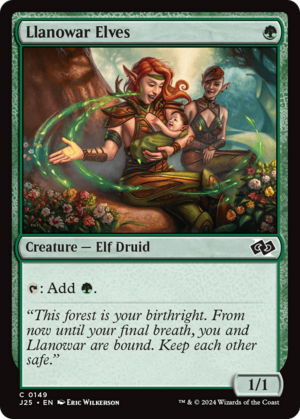
Card Details
Llanowar Elves #149 Creature — Elf Druid
Info
| Color: | |
| Identifies: | |
| Cost: |
|
| Rarity: | Common |
| Converted Cost: | 1 |
| Power/Toughness: | 1/1 |
| Types: | |
| SubTypes: | |
| Languages: |
|
| Layout: | Normal |
| Rank: | |
| Saltiness: |
Rules
Text
: Add . 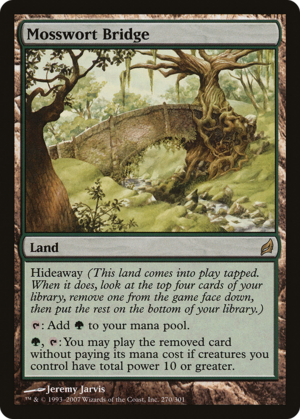
Card Details
Mosswort Bridge #270 Land
Info
| Color: | |
| Identifies: | |
| Cost: | |
| Rarity: | Rare |
| Converted Cost: | 0 |
| Power/Toughness: | / |
| Types: | |
| SubTypes: | |
| Languages: |
|
| Layout: | Normal |
| Rank: | |
| Saltiness: |
Abilities/Keywords
Rules
Prices
Legalities
Brawl
Paupercommander
Predh
Standardbrawl
Vintage
Gladiator
Premodern
Oathbreaker
Duel
Pauper
Modern
Alchemy
Future
Timeless
Historic
Oldschool
Penny
Commander
Legacy
Standard
Pioneer
Text
Hideaway 4 (When this land enters, look at the top four cards of your library, exile one face down, then put the rest on the bottom in a random order.) This land enters tapped.: Add .
, : You may play the exiled card without paying its mana cost if creatures you control have total power 10 or greater. 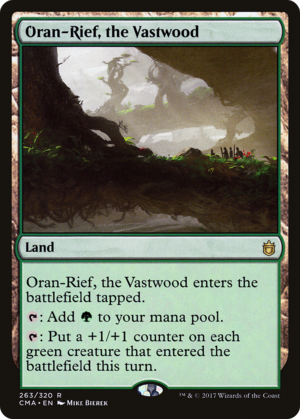
Card Details
Oran-Rief, the Vastwood #263 Land
Info
| Color: | |
| Identifies: | |
| Cost: | |
| Rarity: | Rare |
| Converted Cost: | 0 |
| Power/Toughness: | / |
| Types: | |
| SubTypes: | |
| Languages: |
|
| Layout: | Normal |
| Rank: | |
| Saltiness: |
Rules
Text
This land enters tapped.: Add .
: Put a +1/+1counteron each green creature that entered this turn. 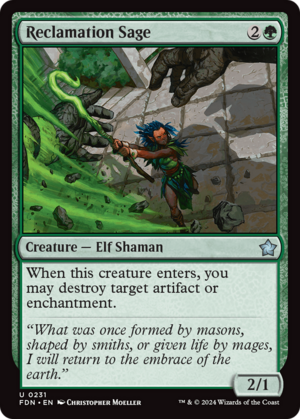
Card Details
Reclamation Sage #231 Creature — Elf Shaman
Info
| Color: | |
| Identifies: | |
| Cost: |
|
| Rarity: | Uncommon |
| Converted Cost: | 3 |
| Power/Toughness: | 2/1 |
| Types: | |
| SubTypes: | |
| Languages: |
|
| Layout: | Normal |
| Rank: | |
| Saltiness: |
Rules
Prices
Legalities
Brawl
Paupercommander
Predh
Standardbrawl
Vintage
Gladiator
Premodern
Oathbreaker
Duel
Pauper
Modern
Alchemy
Future
Timeless
Historic
Oldschool
Penny
Commander
Legacy
Standard
Pioneer
Text
When this creature enters, you maydestroytarget artifact or enchantment.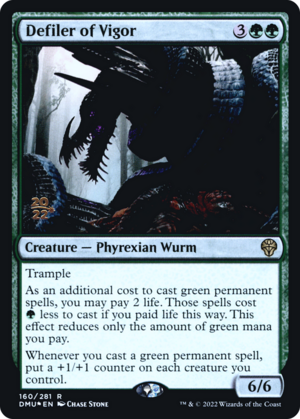
Card Details
Defiler of Vigor #160s Creature — Phyrexian Wurm
Info
| Color: | |
| Identifies: | |
| Cost: |
|
| Rarity: | Rare |
| Converted Cost: | 5 |
| Power/Toughness: | 6/6 |
| Types: | |
| SubTypes: | |
| Languages: |
|
| Layout: | Normal |
| Rank: | |
| Saltiness: |
Abilities/Keywords
Rules
Text
Trample As an additional cost to cast green permanent spells, you may pay 2 life. Those spells cost less to cast if you paid life this way. This effect reduces only the amount of green mana you pay.
Whenever you cast a green permanent spell, put a +1/+1counteron each creature you control. 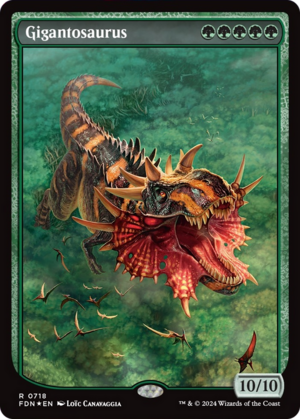
Card Details
Gigantosaurus #718 Creature — Dinosaur
Info
| Color: | |
| Identifies: | |
| Cost: |
|
| Rarity: | Rare |
| Converted Cost: | 5 |
| Power/Toughness: | 10/10 |
| Types: | |
| SubTypes: | |
| Languages: |
|
| Layout: | Normal |
| Rank: | |
| Saltiness: |
Rules
Text
Card Details
Tribute to the World Tree #211s Enchantment
Info
| Color: | |
| Identifies: | |
| Cost: |
|
| Rarity: | Rare |
| Converted Cost: | 3 |
| Power/Toughness: | / |
| Types: | |
| SubTypes: | |
| Languages: |
|
| Layout: | Normal |
| Rank: | |
| Saltiness: |
Rules
Text
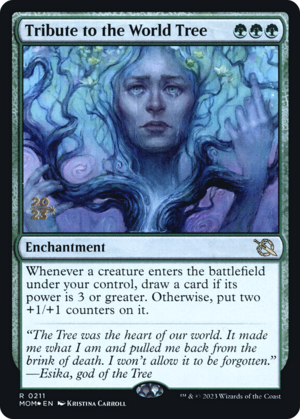
Whenever a creature you control enters, draw a card if its power is 3 or greater. Otherwise, put two +1/+1 counters on it.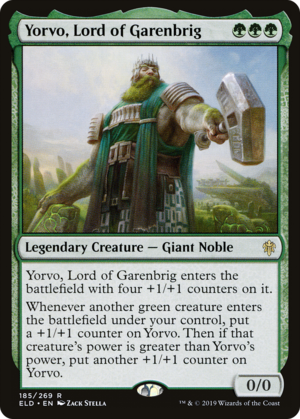
Card Details
Yorvo, Lord of Garenbrig #185 Legendary Creature — Giant Noble
Info
| Color: | |
| Identifies: | |
| Cost: |
|
| Rarity: | Rare |
| Converted Cost: | 3 |
| Power/Toughness: | 0/0 |
| Types: | |
| SubTypes: | |
| Languages: |
|
| Layout: | Normal |
| Rank: | |
| Saltiness: |
Rules
Prices
Legalities
Brawl
Paupercommander
Predh
Standardbrawl
Vintage
Gladiator
Premodern
Oathbreaker
Duel
Pauper
Modern
Alchemy
Future
Timeless
Historic
Oldschool
Penny
Commander
Legacy
Standard
Pioneer
Text
Yorvo enters with four +1/+1 counters on it. Whenever another green creature you control enters, put a +1/+1counteron Yorvo. Then if that creature's power is greater than Yorvo's power, put another +1/+1counteron Yorvo.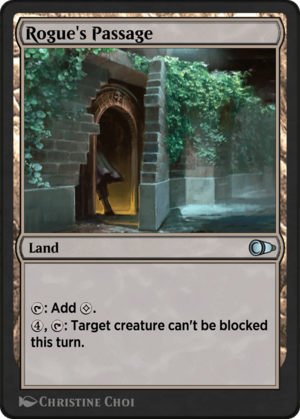
Card Details
Rogue's Passage #273 Land
Info
| Color: | |
| Identifies: | |
| Cost: | |
| Rarity: | Uncommon |
| Converted Cost: | 0 |
| Power/Toughness: | / |
| Types: | |
| SubTypes: | |
| Languages: |
|
| Layout: | Normal |
| Rank: | |
| Saltiness: |
Rules
Prices
| Seller | Price |
|---|
Legalities
Brawl
Paupercommander
Predh
Standardbrawl
Vintage
Gladiator
Premodern
Oathbreaker
Duel
Pauper
Modern
Alchemy
Future
Timeless
Historic
Oldschool
Penny
Commander
Legacy
Standard
Pioneer
Text
: Add .
 , : Target creature can't be blocked this turn.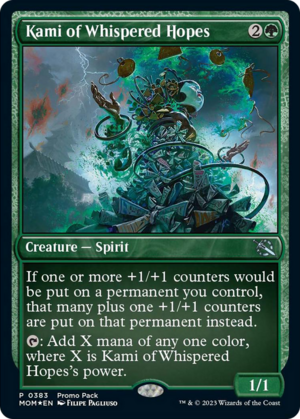
Card Details
Kami of Whispered Hopes #383 Creature — Spirit
Info
| Color: | |
| Identifies: | |
| Cost: |
|
| Rarity: | Uncommon |
| Converted Cost: | 3 |
| Power/Toughness: | 1/1 |
| Types: | |
| SubTypes: | |
| Languages: |
|
| Layout: | Normal |
| Rank: | |
| Saltiness: |
Rules
Prices
Legalities
Brawl
Paupercommander
Predh
Standardbrawl
Vintage
Gladiator
Premodern
Oathbreaker
Duel
Pauper
Modern
Alchemy
Future
Timeless
Historic
Oldschool
Penny
Commander
Legacy
Standard
Pioneer
Text
If one or more +1/+1 counters would be put on a permanent you control, that many plus one +1/+1 counters are put on that permanent instead.: Add X mana of any one color, where X is this creature's power. 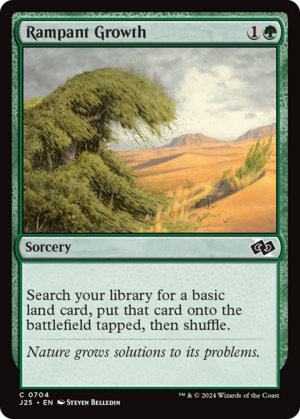
Card Details
Rampant Growth #704 Sorcery
Info
| Color: | |
| Identifies: | |
| Cost: |
|
| Rarity: | Common |
| Converted Cost: | 2 |
| Power/Toughness: | / |
| Types: | |
| SubTypes: | |
| Languages: |
|
| Layout: | Normal |
| Rank: | |
| Saltiness: |
Rules
Text
Search your library for a basic land card, put that card onto the battlefield tapped, thenshuffle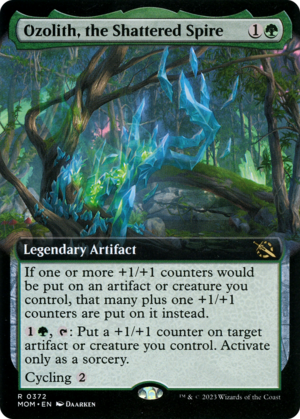
Card Details
Ozolith, the Shattered Spire #372 Legendary Artifact
Info
| Color: | |
| Identifies: | |
| Cost: |
|
| Rarity: | Rare |
| Converted Cost: | 2 |
| Power/Toughness: | / |
| Types: | |
| SubTypes: | |
| Languages: |
|
| Layout: | Normal |
| Rank: | |
| Saltiness: |
Abilities/Keywords
Rules
Prices
Legalities
Brawl
Paupercommander
Predh
Standardbrawl
Vintage
Gladiator
Premodern
Oathbreaker
Duel
Pauper
Modern
Alchemy
Future
Timeless
Historic
Oldschool
Penny
Commander
Legacy
Standard
Pioneer
Text
If one or more +1/+1 counters would be put on an artifact or creature you control, that many plus one +1/+1 counters are put on it instead. , : Put a +1/+1counteron target artifact or creature you control. Activate only as a sorcery.
Cycling
, : Put a +1/+1counteron target artifact or creature you control. Activate only as a sorcery.
Cycling  (,Discardthis card: Draw a card.)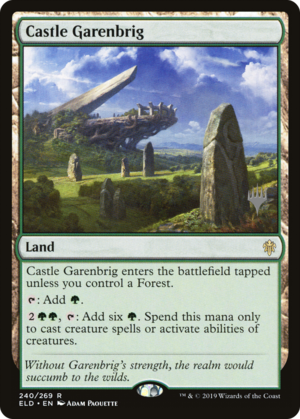
Card Details
Castle Garenbrig #240p Land
Info
| Color: | |
| Identifies: | |
| Cost: | |
| Rarity: | Rare |
| Converted Cost: | 0 |
| Power/Toughness: | / |
| Types: | |
| SubTypes: | |
| Languages: |
|
| Layout: | Normal |
| Rank: | |
| Saltiness: |
Rules
Prices
Legalities
Brawl
Paupercommander
Predh
Standardbrawl
Vintage
Gladiator
Premodern
Oathbreaker
Duel
Pauper
Modern
Alchemy
Future
Timeless
Historic
Oldschool
Penny
Commander
Legacy
Standard
Pioneer
Text
This land enters tapped unless you control a Forest.: Add .
, : Add six . Spend this mana only to cast creature spells or activate abilities of creatures. 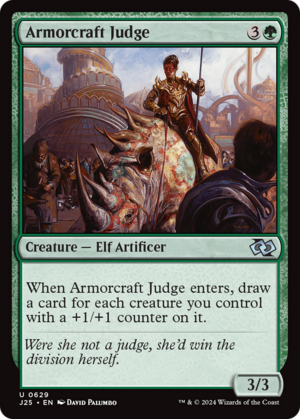
Card Details
Armorcraft Judge #629 Creature — Elf Artificer
Info
| Color: | |
| Identifies: | |
| Cost: |
|
| Rarity: | Uncommon |
| Converted Cost: | 4 |
| Power/Toughness: | 3/3 |
| Types: | |
| SubTypes: | |
| Languages: |
|
| Layout: | Normal |
| Rank: | |
| Saltiness: |
Rules
Text
When this creature enters, draw a card for each creature you control with a +1/+1counteron it.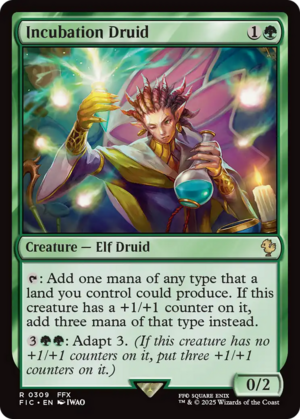
Card Details
Incubation Druid #309 Creature — Elf Druid
Info
| Color: | |
| Identifies: | |
| Cost: |
|
| Rarity: | Rare |
| Converted Cost: | 2 |
| Power/Toughness: | 0/2 |
| Types: | |
| SubTypes: | |
| Languages: |
|
| Layout: | Normal |
| Rank: | |
| Saltiness: |
Abilities/Keywords
Rules
Prices
Legalities
Brawl
Paupercommander
Predh
Standardbrawl
Vintage
Gladiator
Premodern
Oathbreaker
Duel
Pauper
Modern
Alchemy
Future
Timeless
Historic
Oldschool
Penny
Commander
Legacy
Standard
Pioneer
Text
: Add one mana of any type that a land you control could produce. If this creature has a +1/+1counteron it, add three mana of that type instead.
 : Adapt 3. (If this creature has no +1/+1 counters on it, put three +1/+1 counters on it.)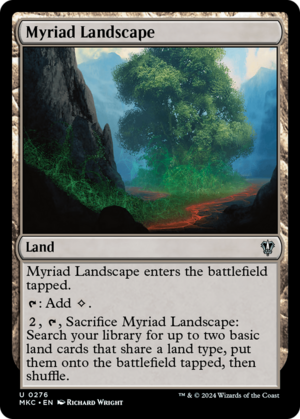
Card Details
Myriad Landscape #276 Land
Info
| Color: | |
| Identifies: | |
| Cost: | |
| Rarity: | Uncommon |
| Converted Cost: | 0 |
| Power/Toughness: | / |
| Types: | |
| SubTypes: | |
| Languages: |
|
| Layout: | Normal |
| Rank: | |
| Saltiness: |
Rules
Text
This land enters tapped.: Add .
, ,Sacrificethis land: Search your library for up to two basic land cards that share a land type, put them onto the battlefield tapped, thenshuffle 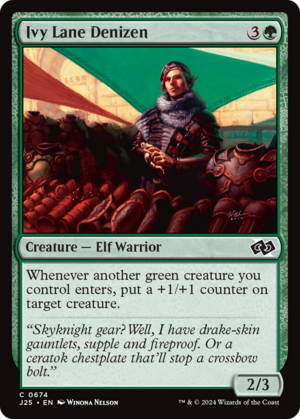
Card Details
Ivy Lane Denizen #674 Creature — Elf Warrior
Info
| Color: | |
| Identifies: | |
| Cost: |
|
| Rarity: | Common |
| Converted Cost: | 4 |
| Power/Toughness: | 2/3 |
| Types: | |
| SubTypes: | |
| Languages: |
|
| Layout: | Normal |
| Rank: | |
| Saltiness: |
Rules
Text
Whenever another green creature you control enters, put a +1/+1counteron target creature.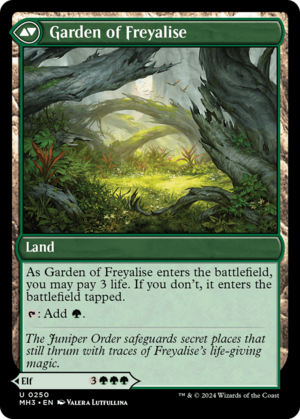
Card Details
Disciple of Freyalise (Disciple of Freyalise // Garden of Freyalise) #250 Creature — Elf Druid
Info
| Color: | |
| Identifies: | |
| Cost: |
|
| Rarity: | Uncommon |
| Converted Cost: | 6 |
| Power/Toughness: | 3/3 |
| Types: | |
| SubTypes: | |
| Languages: |
|
| Layout: | Modal Dfc |
| Rank: | |
| Saltiness: |
Rules
Text
When this creature enters, you maysacrificeanother creature. If you do, you gain X life and draw X cards, where X is that creature's power.Garden of Freyalise (Disciple of Freyalise // Garden of Freyalise) #250 Land
Info
| Color: | |
| Identifies: | |
| Cost: | |
| Rarity: | Uncommon |
| Converted Cost: | 0 |
| Power/Toughness: | / |
| Types: | |
| SubTypes: | |
| Languages: |
|
| Layout: | Modal Dfc |
| Rank: | |
| Saltiness: |
Rules
Prices
Legalities
Brawl
Paupercommander
Predh
Standardbrawl
Vintage
Gladiator
Premodern
Oathbreaker
Duel
Pauper
Modern
Alchemy
Future
Timeless
Historic
Oldschool
Penny
Commander
Legacy
Standard
Pioneer
Text
As this land enters, you may pay 3 life. If you don't, it enters tapped.: Add . 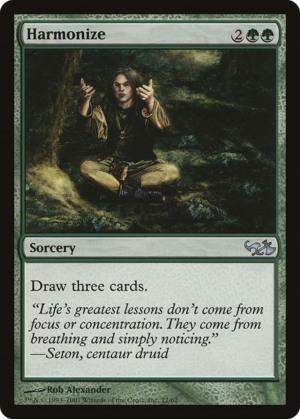
Card Details
Harmonize #22 Sorcery
Info
| Color: | |
| Identifies: | |
| Cost: |
|
| Rarity: | Uncommon |
| Converted Cost: | 4 |
| Power/Toughness: | / |
| Types: | |
| SubTypes: | |
| Languages: |
|
| Layout: | Normal |
| Rank: | |
| Saltiness: |
Rules
Text
Draw three cards.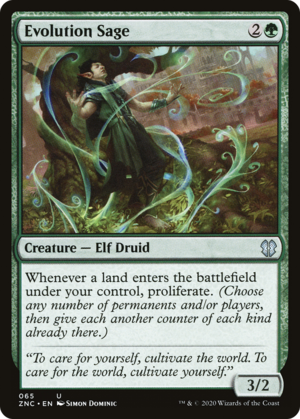
Card Details
Evolution Sage #65 Creature — Elf Druid
Info
| Color: | |
| Identifies: | |
| Cost: |
|
| Rarity: | Uncommon |
| Converted Cost: | 3 |
| Power/Toughness: | 3/2 |
| Types: | |
| SubTypes: | |
| Languages: |
|
| Layout: | Normal |
| Rank: | |
| Saltiness: |
Abilities/Keywords
Rules
Text
Landfall — Whenever a land you control enters, proliferate. (Choose any number of permanents and/or players, then give each anothercounterof each kind already there.)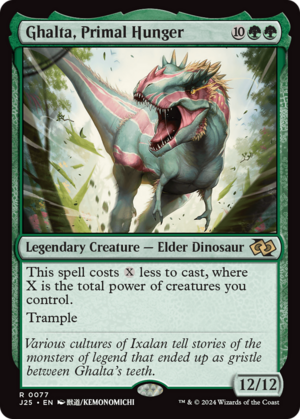
Card Details
Ghalta, Primal Hunger #77 Legendary Creature — Elder Dinosaur
Info
| Color: | |
| Identifies: | |
| Cost: |
 |
| Rarity: | Rare |
| Converted Cost: | 12 |
| Power/Toughness: | 12/12 |
| Types: | |
| SubTypes: | |
| Languages: |
|
| Layout: | Normal |
| Rank: | |
| Saltiness: |
Abilities/Keywords
Rules
Text
This spell costs less to cast, where X is the total power of creatures you control.
Trample (This creature can deal excess combat damage to the player or planeswalker it's attacking.)
less to cast, where X is the total power of creatures you control.
Trample (This creature can deal excess combat damage to the player or planeswalker it's attacking.) 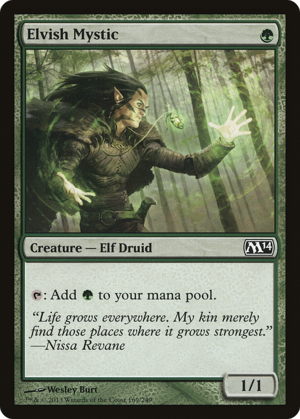
Card Details
Elvish Mystic #169 aka. Fishstick Creature — Elf Druid
Info
| Color: | |
| Identifies: | |
| Cost: |
|
| Rarity: | Common |
| Converted Cost: | 1 |
| Power/Toughness: | 1/1 |
| Types: | |
| SubTypes: | |
| Languages: |
|
| Layout: | Normal |
| Rank: | |
| Saltiness: |
Rules
Prices
Legalities
Brawl
Paupercommander
Predh
Standardbrawl
Vintage
Gladiator
Premodern
Oathbreaker
Duel
Pauper
Modern
Alchemy
Future
Timeless
Historic
Oldschool
Penny
Commander
Legacy
Standard
Pioneer
Text
: Add . 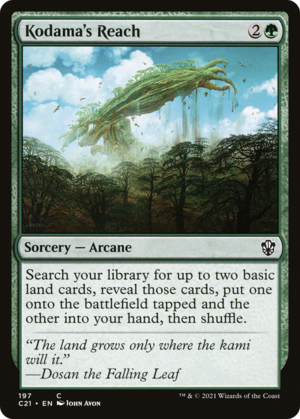
Card Details
Kodama's Reach #197 Sorcery — Arcane
Info
| Color: | |
| Identifies: | |
| Cost: |
|
| Rarity: | Common |
| Converted Cost: | 3 |
| Power/Toughness: | / |
| Types: | |
| SubTypes: | |
| Languages: |
|
| Layout: | Normal |
| Rank: | |
| Saltiness: |
Rules
Text
Search your library for up to two basic land cards, reveal those cards, put one onto the battlefield tapped and the other into your hand, thenshuffle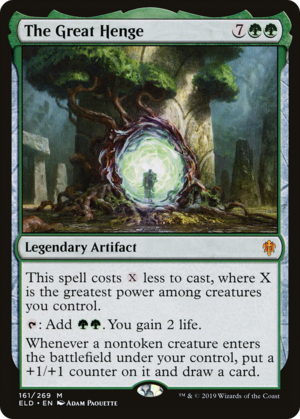
Card Details
The Great Henge #161 Legendary Artifact
Info
| Color: | |
| Identifies: | |
| Cost: |
 |
| Rarity: | Mythic |
| Converted Cost: | 9 |
| Power/Toughness: | / |
| Types: | |
| SubTypes: | |
| Languages: |
|
| Layout: | Normal |
| Rank: | |
| Saltiness: |
Rules
Prices
Legalities
Brawl
Paupercommander
Predh
Standardbrawl
Vintage
Gladiator
Premodern
Oathbreaker
Duel
Pauper
Modern
Alchemy
Future
Timeless
Historic
Oldschool
Penny
Commander
Legacy
Standard
Pioneer
Text
This spell costs less to cast, where X is the greatest power among creatures you control.
: Add . You gain 2 life.
Whenever a nontoken creature you control enters, put a +1/+1counteron it and draw a card. 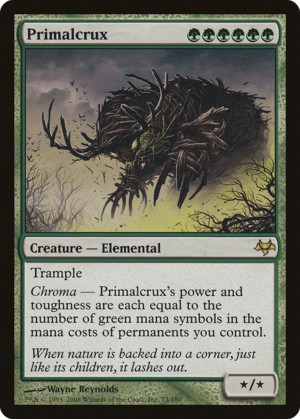
Card Details
Primalcrux #73 Creature — Elemental
Info
| Color: | |
| Identifies: | |
| Cost: |
|
| Rarity: | Rare |
| Converted Cost: | 6 |
| Power/Toughness: | */* |
| Types: | |
| SubTypes: | |
| Languages: |
|
| Layout: | Normal |
| Rank: | |
| Saltiness: |
Abilities/Keywords
Rules
Prices
Legalities
Brawl
Paupercommander
Predh
Standardbrawl
Vintage
Gladiator
Premodern
Oathbreaker
Duel
Pauper
Modern
Alchemy
Future
Timeless
Historic
Oldschool
Penny
Commander
Legacy
Standard
Pioneer
Text
Trample Chroma — This creature's power and toughness are each equal to the number of green mana symbols in the mana costs of permanents you control.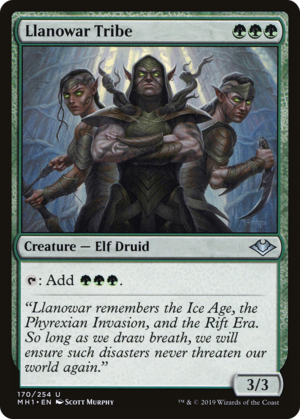
Card Details
Llanowar Tribe #170 Creature — Elf Druid
Info
| Color: | |
| Identifies: | |
| Cost: |
|
| Rarity: | Uncommon |
| Converted Cost: | 3 |
| Power/Toughness: | 3/3 |
| Types: | |
| SubTypes: | |
| Languages: |
|
| Layout: | Normal |
| Rank: | |
| Saltiness: |
Rules
Prices
Legalities
Brawl
Paupercommander
Predh
Standardbrawl
Vintage
Gladiator
Premodern
Oathbreaker
Duel
Pauper
Modern
Alchemy
Future
Timeless
Historic
Oldschool
Penny
Commander
Legacy
Standard
Pioneer
Text
: Add . 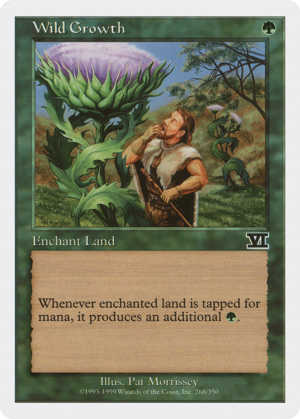
Card Details
Wild Growth #268 Enchantment — Aura
Info
| Color: | |
| Identifies: | |
| Cost: |
|
| Rarity: | Common |
| Converted Cost: | 1 |
| Power/Toughness: | / |
| Types: | |
| SubTypes: | |
| Languages: |
|
| Layout: | Normal |
| Rank: | |
| Saltiness: |
Abilities/Keywords
Rules
Text
Enchant land Whenever enchanted land is tapped for mana, its controller adds an additional. 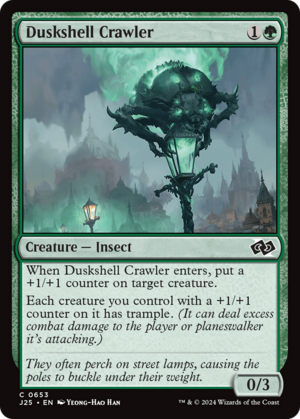
Card Details
Duskshell Crawler #653 Creature — Insect
Info
| Color: | |
| Identifies: | |
| Cost: |
|
| Rarity: | Common |
| Converted Cost: | 2 |
| Power/Toughness: | 0/3 |
| Types: | |
| SubTypes: | |
| Languages: |
|
| Layout: | Normal |
| Rank: | |
| Saltiness: |
Rules
Text
When this creature enters, put a +1/+1counteron target creature. Each creature you control with a +1/+1counteron it has trample. (It can deal excess combat damage to the player or planeswalker it's attacking.)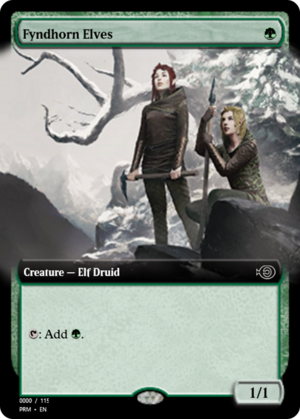
Card Details
Fyndhorn Elves #86118 Creature — Elf Druid
Info
| Color: | |
| Identifies: | |
| Cost: |
|
| Rarity: | Common |
| Converted Cost: | 1 |
| Power/Toughness: | 1/1 |
| Types: | |
| SubTypes: | |
| Languages: |
|
| Layout: | Normal |
| Rank: | |
| Saltiness: |
Rules
Prices
| Seller | Price |
|---|
Legalities
Brawl
Paupercommander
Predh
Standardbrawl
Vintage
Gladiator
Premodern
Oathbreaker
Duel
Pauper
Modern
Alchemy
Future
Timeless
Historic
Oldschool
Penny
Commander
Legacy
Standard
Pioneer
Text
: Add . 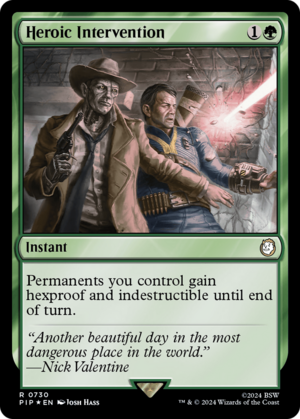
Card Details
Heroic Intervention #730 Instant
Info
| Color: | |
| Identifies: | |
| Cost: |
|
| Rarity: | Rare |
| Converted Cost: | 2 |
| Power/Toughness: | / |
| Types: | |
| SubTypes: | |
| Languages: |
|
| Layout: | Normal |
| Rank: | |
| Saltiness: |
Rules
Text
Permanents you control gain hexproof and indestructible until end of turn.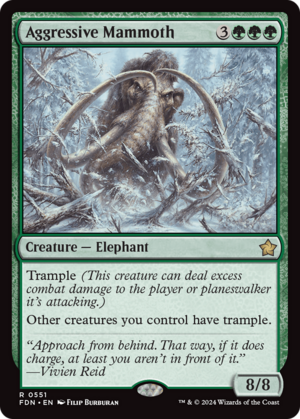
Card Details
Aggressive Mammoth #551 Creature — Elephant
Info
| Color: | |
| Identifies: | |
| Cost: |
|
| Rarity: | Rare |
| Converted Cost: | 6 |
| Power/Toughness: | 8/8 |
| Types: | |
| SubTypes: | |
| Languages: |
|
| Layout: | Normal |
| Rank: | |
| Saltiness: |
Abilities/Keywords
Rules
Text
Trample (This creature can deal excess combat damage to the player or planeswalker it's attacking.) Other creatures you control have trample.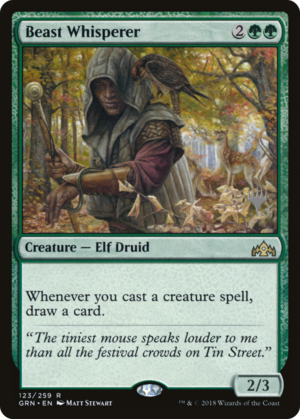
Card Details
Beast Whisperer #123p Creature — Elf Druid
Info
| Color: | |
| Identifies: | |
| Cost: |
|
| Rarity: | Rare |
| Converted Cost: | 4 |
| Power/Toughness: | 2/3 |
| Types: | |
| SubTypes: | |
| Languages: |
|
| Layout: | Normal |
| Rank: | |
| Saltiness: |
Rules
Prices
Legalities
Brawl
Paupercommander
Predh
Standardbrawl
Vintage
Gladiator
Premodern
Oathbreaker
Duel
Pauper
Modern
Alchemy
Future
Timeless
Historic
Oldschool
Penny
Commander
Legacy
Standard
Pioneer
Text
Whenever you cast a creature spell, draw a card.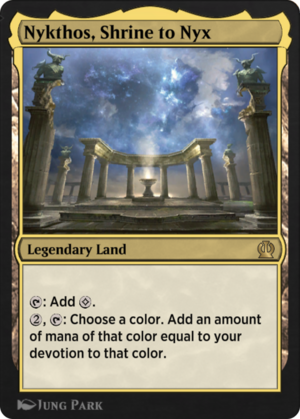
Card Details
Nykthos, Shrine to Nyx #24 Legendary Land
Info
| Color: | |
| Identifies: | |
| Cost: | |
| Rarity: | Rare |
| Converted Cost: | 0 |
| Power/Toughness: | / |
| Types: | |
| SubTypes: | |
| Languages: |
|
| Layout: | Normal |
| Rank: | |
| Saltiness: |
Rules
Prices
| Seller | Price |
|---|
Legalities
Brawl
Paupercommander
Predh
Standardbrawl
Vintage
Gladiator
Premodern
Oathbreaker
Duel
Pauper
Modern
Alchemy
Future
Timeless
Historic
Oldschool
Penny
Commander
Legacy
Standard
Pioneer
Text
: Add .
, : Choose a color. Add an amount of mana of that color equal to your devotion to that color. (Your devotion to a color is the number of mana symbols of that color in the mana costs of permanents you control.) 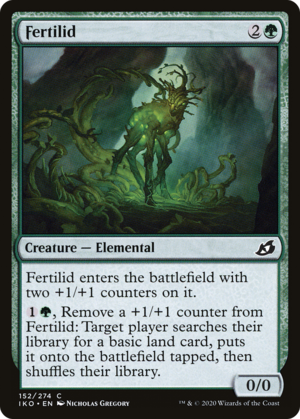
Card Details
Fertilid #152 Creature — Elemental
Info
| Color: | |
| Identifies: | |
| Cost: |
|
| Rarity: | Common |
| Converted Cost: | 3 |
| Power/Toughness: | 0/0 |
| Types: | |
| SubTypes: | |
| Languages: |
|
| Layout: | Normal |
| Rank: | |
| Saltiness: |
Rules
Prices
Legalities
Brawl
Paupercommander
Predh
Standardbrawl
Vintage
Gladiator
Premodern
Oathbreaker
Duel
Pauper
Modern
Alchemy
Future
Timeless
Historic
Oldschool
Penny
Commander
Legacy
Standard
Pioneer
Text
This creature enters with two +1/+1 counters on it., Remove a +1/+1counterfrom this creature: Target player searches their library for a basic land card, puts it onto the battlefield tapped, then shuffles. 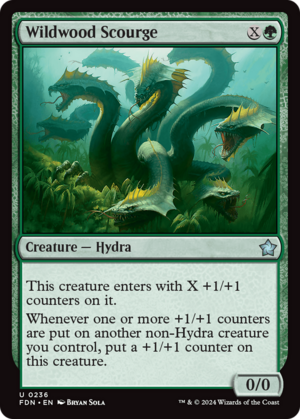
Card Details
Wildwood Scourge #236 Creature — Hydra
Info
| Color: | |
| Identifies: | |
| Cost: |
 |
| Rarity: | Uncommon |
| Converted Cost: | 1 |
| Power/Toughness: | 0/0 |
| Types: | |
| SubTypes: | |
| Languages: |
|
| Layout: | Normal |
| Rank: | |
| Saltiness: |
Rules
Prices
Legalities
Brawl
Paupercommander
Predh
Standardbrawl
Vintage
Gladiator
Premodern
Oathbreaker
Duel
Pauper
Modern
Alchemy
Future
Timeless
Historic
Oldschool
Penny
Commander
Legacy
Standard
Pioneer
Text
This creature enters with X +1/+1 counters on it. Whenever one or more +1/+1 counters are put on another non-Hydra creature you control, put a +1/+1counteron this creature.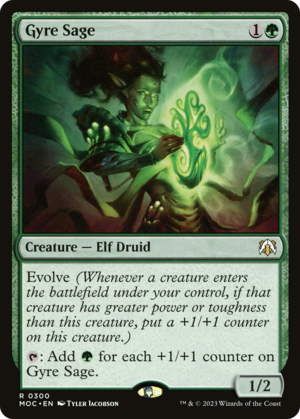
Card Details
Gyre Sage #300 Creature — Elf Druid
Info
| Color: | |
| Identifies: | |
| Cost: |
|
| Rarity: | Rare |
| Converted Cost: | 2 |
| Power/Toughness: | 1/2 |
| Types: | |
| SubTypes: | |
| Languages: |
|
| Layout: | Normal |
| Rank: | |
| Saltiness: |
Abilities/Keywords
Rules
Text
Evolve (Whenever a creature you control enters, if that creature has greater power or toughness than this creature, put a +1/+1counteron this creature.): Add for each +1/+1counteron this creature. 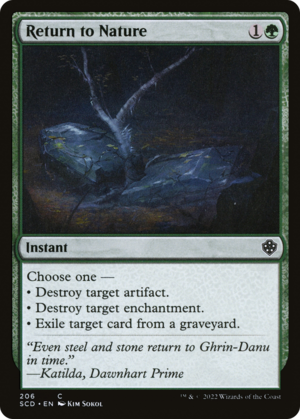
Card Details
Return to Nature #206 Instant
Info
| Color: | |
| Identifies: | |
| Cost: |
|
| Rarity: | Common |
| Converted Cost: | 2 |
| Power/Toughness: | / |
| Types: | |
| SubTypes: | |
| Languages: |
|
| Layout: | Normal |
| Rank: | |
| Saltiness: |
Rules
Text
Choose one — •Destroytarget artifact. •Destroytarget enchantment. • Exile target card from a graveyard.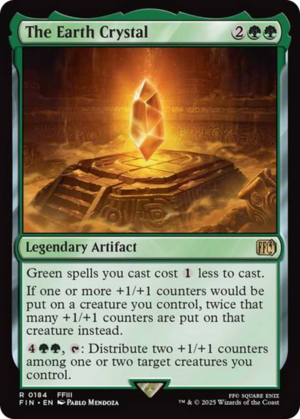
Card Details
The Earth Crystal #184 Legendary Artifact
Info
| Color: | |
| Identifies: | |
| Cost: |
|
| Rarity: | Rare |
| Converted Cost: | 4 |
| Power/Toughness: | / |
| Types: | |
| SubTypes: | |
| Languages: |
|
| Layout: | Normal |
| Rank: | |
| Saltiness: |
Rules
Prices
Legalities
Brawl
Paupercommander
Predh
Standardbrawl
Vintage
Gladiator
Premodern
Oathbreaker
Duel
Pauper
Modern
Alchemy
Future
Timeless
Historic
Oldschool
Penny
Commander
Legacy
Standard
Pioneer
Text
Green spells you cast cost less to cast.
If one or more +1/+1 counters would be put on a creature you control, twice that many +1/+1 counters are put on that creature instead.
, : Distribute two +1/+1 counters among one or two target creatures you control. 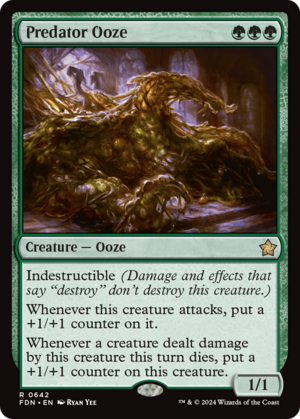
Card Details
Predator Ooze #642 Creature — Ooze
Info
| Color: | |
| Identifies: | |
| Cost: |
|
| Rarity: | Rare |
| Converted Cost: | 3 |
| Power/Toughness: | 1/1 |
| Types: | |
| SubTypes: | |
| Languages: |
|
| Layout: | Normal |
| Rank: | |
| Saltiness: |
Abilities/Keywords
Rules
Text
Indestructible (Damage and effects that say "destroy" don'tdestroythis creature.) Whenever this creature attacks, put a +1/+1counteron it. Whenever a creature dealt damage by this creature this turn dies, put a +1/+1counteron this creature.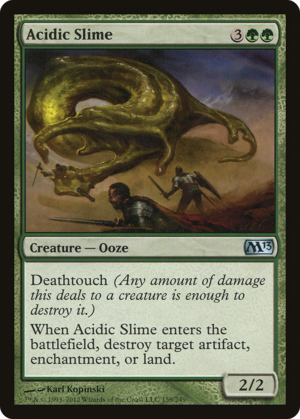
Card Details
Acidic Slime #159 Creature — Ooze
Info
| Color: | |
| Identifies: | |
| Cost: |
|
| Rarity: | Uncommon |
| Converted Cost: | 5 |
| Power/Toughness: | 2/2 |
| Types: | |
| SubTypes: | |
| Languages: |
|
| Layout: | Normal |
| Rank: | |
| Saltiness: |
Abilities/Keywords
Rules
Prices
Legalities
Brawl
Paupercommander
Predh
Standardbrawl
Vintage
Gladiator
Premodern
Oathbreaker
Duel
Pauper
Modern
Alchemy
Future
Timeless
Historic
Oldschool
Penny
Commander
Legacy
Standard
Pioneer
Text
Deathtouch (Any amount of damage this deals to a creature is enough todestroyit.) When this creature enters,destroytarget artifact, enchantment, or land.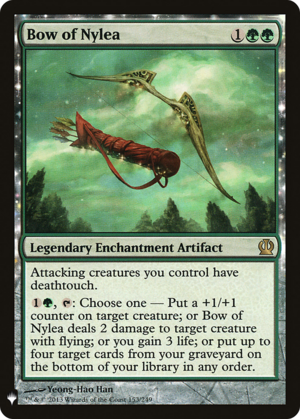
Card Details
Bow of Nylea #THS-153 Legendary Enchantment Artifact
Info
| Color: | |
| Identifies: | |
| Cost: |
|
| Rarity: | Rare |
| Converted Cost: | 3 |
| Power/Toughness: | / |
| Types: | |
| SubTypes: | |
| Languages: |
|
| Layout: | Normal |
| Rank: | |
| Saltiness: |
Rules
Text
Attacking creatures you control have deathtouch., : Choose one —
• Put a +1/+1counteron target creature.
• Bow of Nylea deals 2 damage to target creature with flying.
• You gain 3 life.
• Put up to four target cards from your graveyard on the bottom of your library in any order. 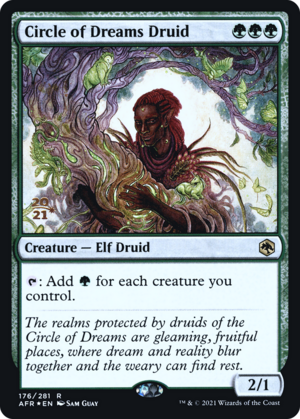
Card Details
Circle of Dreams Druid #176s Creature — Elf Druid
Info
| Color: | |
| Identifies: | |
| Cost: |
|
| Rarity: | Rare |
| Converted Cost: | 3 |
| Power/Toughness: | 2/1 |
| Types: | |
| SubTypes: | |
| Languages: |
|
| Layout: | Normal |
| Rank: | |
| Saltiness: |
Rules
Text
: Add for each creature you control. 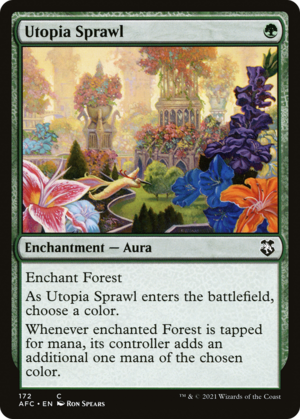
Card Details
Utopia Sprawl #172 Enchantment — Aura
Info
| Color: | |
| Identifies: | |
| Cost: |
|
| Rarity: | Common |
| Converted Cost: | 1 |
| Power/Toughness: | / |
| Types: | |
| SubTypes: | |
| Languages: |
|
| Layout: | Normal |
| Rank: | |
| Saltiness: |
Abilities/Keywords
Rules
Text
Enchant Forest As this Aura enters, choose a color. Whenever enchanted Forest is tapped for mana, its controller adds an additional one mana of the chosen color.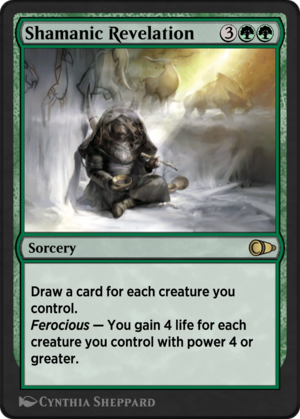
Card Details
Shamanic Revelation #194 Sorcery
Info
| Color: | |
| Identifies: | |
| Cost: |
|
| Rarity: | Rare |
| Converted Cost: | 5 |
| Power/Toughness: | / |
| Types: | |
| SubTypes: | |
| Languages: |
|
| Layout: | Normal |
| Rank: | |
| Saltiness: |
Abilities/Keywords
Rules
Prices
| Seller | Price |
|---|
Legalities
Brawl
Paupercommander
Predh
Standardbrawl
Vintage
Gladiator
Premodern
Oathbreaker
Duel
Pauper
Modern
Alchemy
Future
Timeless
Historic
Oldschool
Penny
Commander
Legacy
Standard
Pioneer
Text
Draw a card for each creature you control. Ferocious — You gain 4 life for each creature you control with power 4 or greater.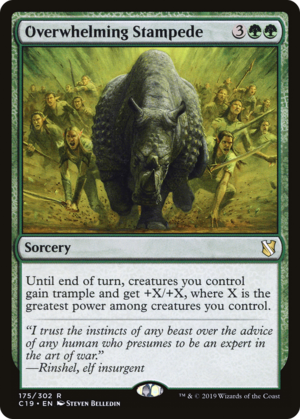
Card Details
Overwhelming Stampede #175 Sorcery
Info
| Color: | |
| Identifies: | |
| Cost: |
|
| Rarity: | Rare |
| Converted Cost: | 5 |
| Power/Toughness: | / |
| Types: | |
| SubTypes: | |
| Languages: |
|
| Layout: | Normal |
| Rank: | |
| Saltiness: |
Rules
Text
Until end of turn, creatures you control gain trample and get +X/+X, where X is the greatest power among creatures you control.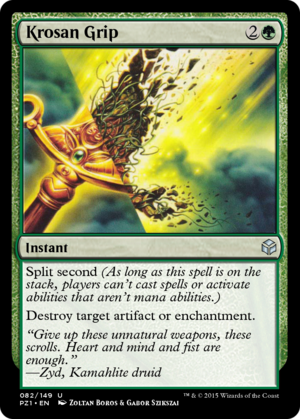
Card Details
Krosan Grip #82 Instant
Info
| Color: | |
| Identifies: | |
| Cost: |
|
| Rarity: | Uncommon |
| Converted Cost: | 3 |
| Power/Toughness: | / |
| Types: | |
| SubTypes: | |
| Languages: |
|
| Layout: | Normal |
| Rank: | |
| Saltiness: |
Abilities/Keywords
Rules
Prices
| Seller | Price |
|---|
Legalities
Brawl
Paupercommander
Predh
Standardbrawl
Vintage
Gladiator
Premodern
Oathbreaker
Duel
Pauper
Modern
Alchemy
Future
Timeless
Historic
Oldschool
Penny
Commander
Legacy
Standard
Pioneer
Text
Split second (As long as this spell is on the stack, players can't cast spells or activate abilities that aren't mana abilities.) Destroy target artifact or enchantment.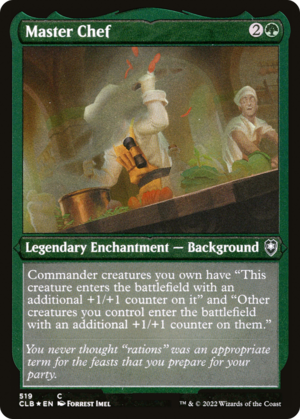
Card Details
Master Chef #519 Legendary Enchantment — Background
Info
| Color: | |
| Identifies: | |
| Cost: |
|
| Rarity: | Common |
| Converted Cost: | 3 |
| Power/Toughness: | / |
| Types: | |
| SubTypes: | |
| Languages: |
|
| Layout: | Normal |
| Rank: | |
| Saltiness: |
Rules
Prices
Legalities
Brawl
Paupercommander
Predh
Standardbrawl
Vintage
Gladiator
Premodern
Oathbreaker
Duel
Pauper
Modern
Alchemy
Future
Timeless
Historic
Oldschool
Penny
Commander
Legacy
Standard
Pioneer
Text
Commander creatures you own have "This creature enters with an additional +1/+1counteron it" and "Other creatures you control enter with an additional +1/+1counteron them."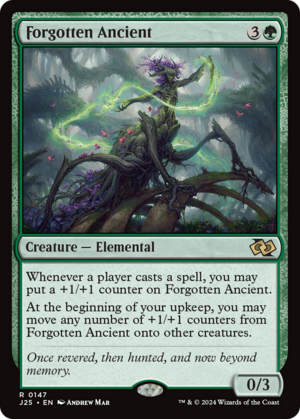
Card Details
Forgotten Ancient #147 Creature — Elemental
Info
| Color: | |
| Identifies: | |
| Cost: |
|
| Rarity: | Rare |
| Converted Cost: | 4 |
| Power/Toughness: | 0/3 |
| Types: | |
| SubTypes: | |
| Languages: |
|
| Layout: | Normal |
| Rank: | |
| Saltiness: |
Rules
Text
Whenever a player casts a spell, you may put a +1/+1counteron this creature. At the beginning of your upkeep, you may move any number of +1/+1 counters from this creature onto other creatures.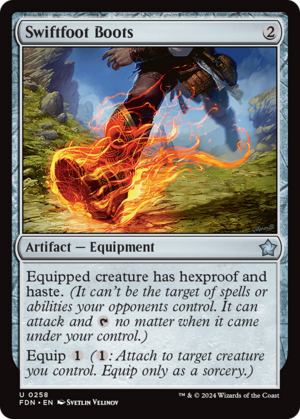
Card Details
Swiftfoot Boots #258 Artifact — Equipment
Info
| Color: | |
| Identifies: | |
| Cost: |
|
| Rarity: | Uncommon |
| Converted Cost: | 2 |
| Power/Toughness: | / |
| Types: | |
| SubTypes: | |
| Languages: |
|
| Layout: | Normal |
| Rank: | |
| Saltiness: |
Abilities/Keywords
Rules
Prices
Legalities
Brawl
Paupercommander
Predh
Standardbrawl
Vintage
Gladiator
Premodern
Oathbreaker
Duel
Pauper
Modern
Alchemy
Future
Timeless
Historic
Oldschool
Penny
Commander
Legacy
Standard
Pioneer
Text
Equipped creature has hexproof and haste. (It can't be the target of spells or abilities your opponents control. It can attack and no matter when it came under your control.)
Equip (: Attach to target creature you control. Equip only as a sorcery.) 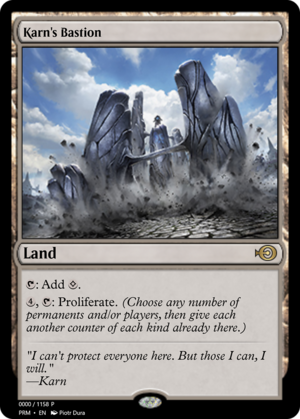
Card Details
Karn's Bastion #72223 Land
Info
| Color: | |
| Identifies: | |
| Cost: | |
| Rarity: | Rare |
| Converted Cost: | 0 |
| Power/Toughness: | / |
| Types: | |
| SubTypes: | |
| Languages: |
|
| Layout: | Normal |
| Rank: | |
| Saltiness: |
Abilities/Keywords
Rules
Prices
| Seller | Price |
|---|
Legalities
Brawl
Paupercommander
Predh
Standardbrawl
Vintage
Gladiator
Premodern
Oathbreaker
Duel
Pauper
Modern
Alchemy
Future
Timeless
Historic
Oldschool
Penny
Commander
Legacy
Standard
Pioneer
Text
: Add .
, : Proliferate. (Choose any number of permanents and/or players, then give each anothercounterof each kind already there.) 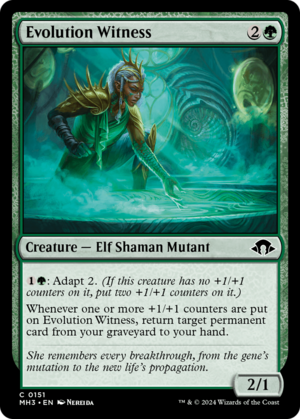
Card Details
Evolution Witness #151 Creature — Elf Shaman Mutant
Info
| Color: | |
| Identifies: | |
| Cost: |
|
| Rarity: | Common |
| Converted Cost: | 3 |
| Power/Toughness: | 2/1 |
| Types: | |
| SubTypes: | |
| Languages: |
|
| Layout: | Normal |
| Rank: | |
| Saltiness: |
Abilities/Keywords
Rules
Prices
Legalities
Brawl
Paupercommander
Predh
Standardbrawl
Vintage
Gladiator
Premodern
Oathbreaker
Duel
Pauper
Modern
Alchemy
Future
Timeless
Historic
Oldschool
Penny
Commander
Legacy
Standard
Pioneer
Text
: Adapt 2. (If this creature has no +1/+1 counters on it, put two +1/+1 counters on it.)
Whenever one or more +1/+1 counters are put on this creature, return target permanent card from your graveyard to your hand. 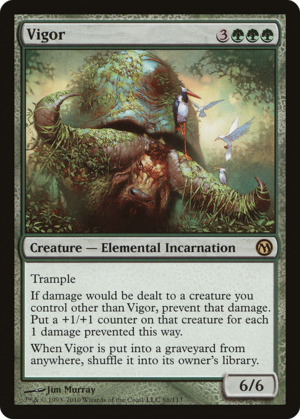
Card Details
Vigor #88 Creature — Elemental Incarnation
Info
| Color: | |
| Identifies: | |
| Cost: |
|
| Rarity: | Rare |
| Converted Cost: | 6 |
| Power/Toughness: | 6/6 |
| Types: | |
| SubTypes: | |
| Languages: |
|
| Layout: | Normal |
| Rank: | |
| Saltiness: |
Abilities/Keywords
Rules
Text
Trample If damage would be dealt to another creature you control, prevent that damage. Put a +1/+1counteron that creature for each 1 damage prevented this way. When Vigor is put into a graveyard from anywhere,shuffleit into its owner's library.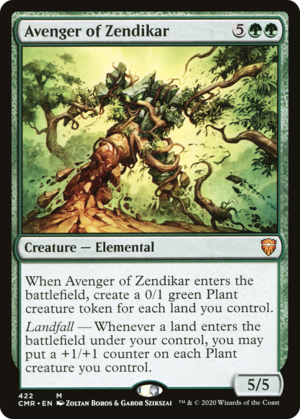
Card Details
Avenger of Zendikar #422 Creature — Elemental
Info
| Color: | |
| Identifies: | |
| Cost: |
 |
| Rarity: | Mythic |
| Converted Cost: | 7 |
| Power/Toughness: | 5/5 |
| Types: | |
| SubTypes: | |
| Languages: |
|
| Layout: | Normal |
| Rank: | |
| Saltiness: | |
| Tokens: |
Abilities/Keywords
Rules
Text
When this creature enters, create a 0/1 green Plant creature token for each land you control. Landfall — Whenever a land you control enters, you may put a +1/+1counteron each Plant creature you control.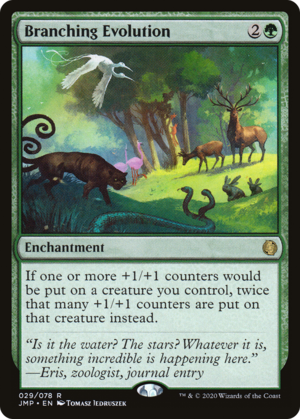
Card Details
Branching Evolution #29 Enchantment
Info
| Color: | |
| Identifies: | |
| Cost: |
|
| Rarity: | Rare |
| Converted Cost: | 3 |
| Power/Toughness: | / |
| Types: | |
| SubTypes: | |
| Languages: |
|
| Layout: | Normal |
| Rank: | |
| Saltiness: |